
Kenya – The Beating Heart of Safari Travel
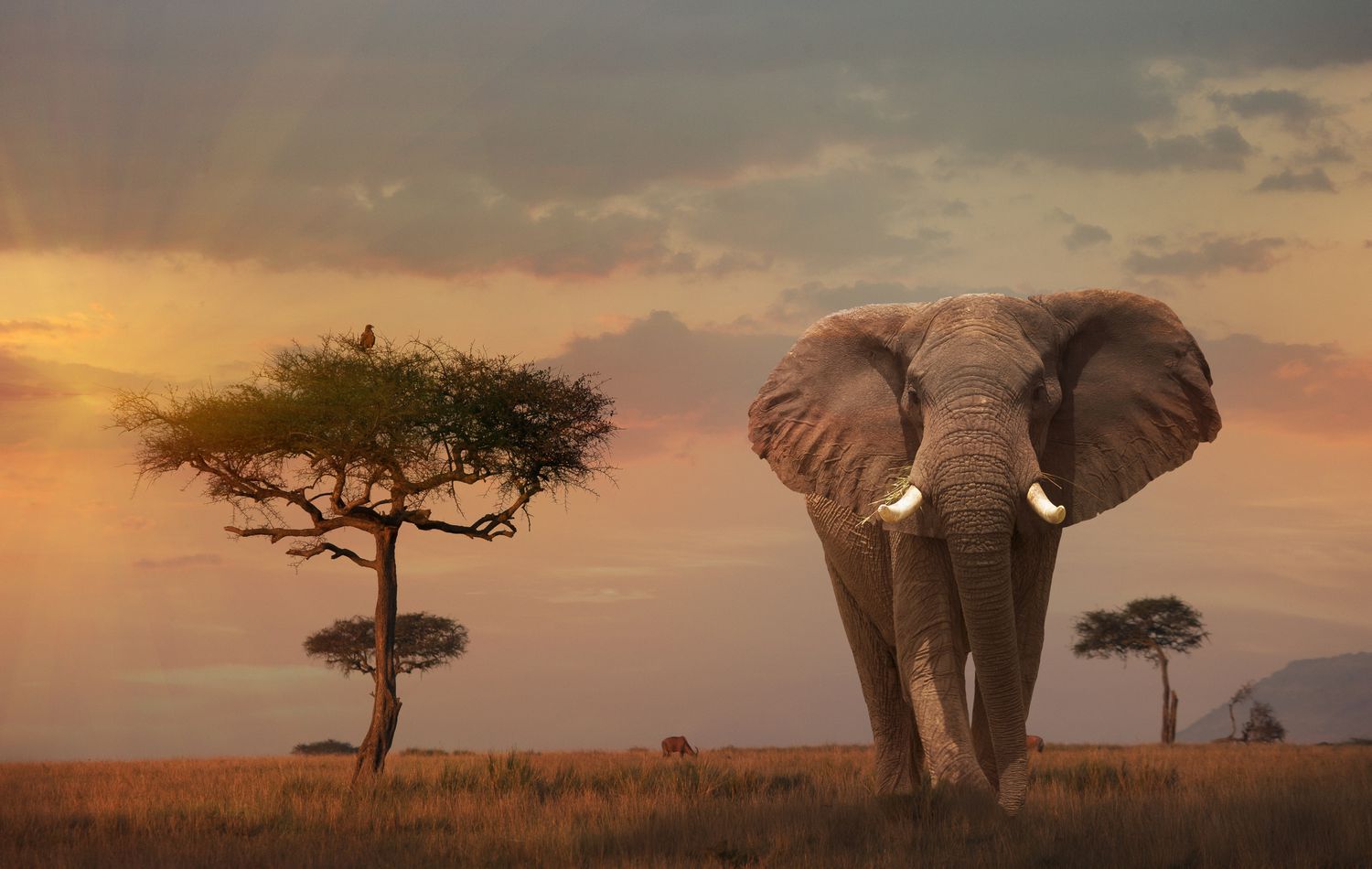
Close your eyes and imagine the perfect African safari scene: vast golden plains stretching to the horizon, acacia trees silhouetted against a crimson sunset, and magnificent wildlife roaming freely as they have for millennia. This isn’t just a dream – this is Kenya, the undisputed heart of safari travel and the birthplace of the modern safari experience.
Kenya stands alone among safari destinations for its incredible diversity. From the world-famous Maasai Mara safari experiences to the intimate encounters possible in lesser-known gems, Kenya offers something magical for every type of traveler. With over 40 national parks and reserves covering nearly 8% of the country, choosing which best safari parks in Kenya to visit can feel overwhelming.
That’s where this guide comes in. We’ve curated the seven absolute must-visit Kenya safari destinations that showcase the very best of what this incredible country offers. Whether you’re a first-time safari-goer or a seasoned African adventurer, these parks will exceed your wildest expectations and create memories that last a lifetime.
Maasai Mara National Reserve: The Crown Jewel of African Safaris
No discussion of best safari parks in Kenya would be complete without starting with the legendary Maasai Mara. This 1,510-square-kilometer reserve isn’t just Kenya’s most famous park – it’s arguably the most celebrated wildlife destination on Earth.
The Great Migration Spectacle
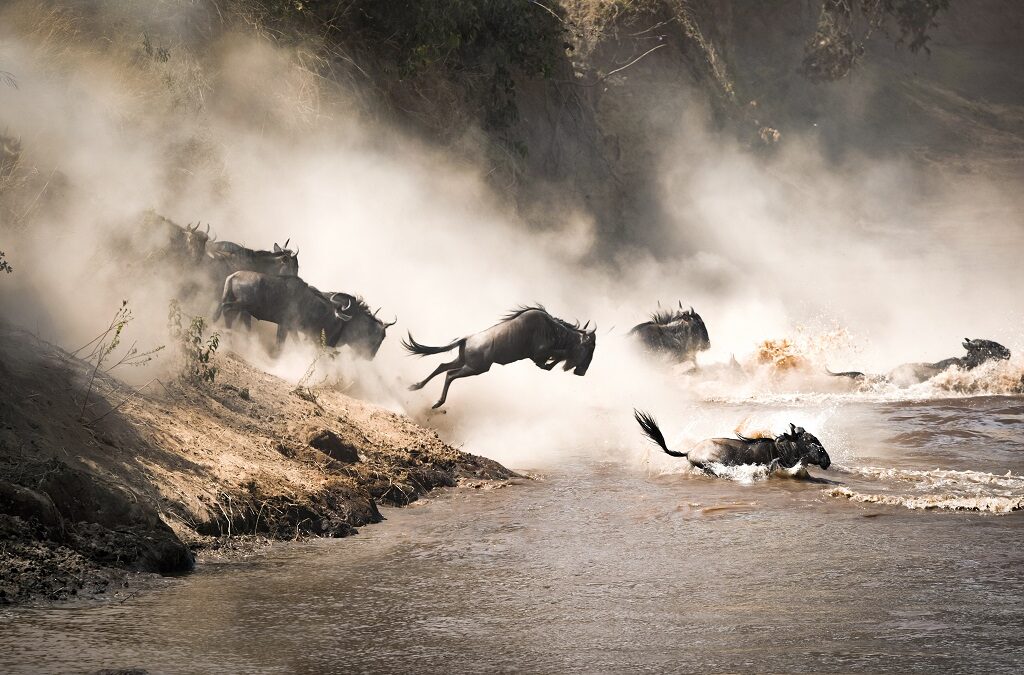
The Maasai Mara safari experience reaches its peak during the Great Migration (July-October), when over 1.5 million wildebeest thunder across the plains accompanied by 200,000 zebras and 400,000 Thomson’s gazelles. The dramatic river crossings at the Mara and Talek rivers are legendary, offering front-row seats to one of nature’s most spectacular survival dramas.
Migration timing:
- July-August: Peak crossing season with daily river crossings
- September-October: Large herds remain with excellent predator viewing
- November: Herds begin moving south, offering unique photographic opportunities
Big Five Central
The Mara is famous for its incredible Big Five density. Lion prides here are among the largest in Africa, with some groups reaching 30+ individuals. The Marsh Pride, made famous by BBC’s Big Cat Diary, continues to thrive and provide incredible wildlife encounters.
Leopard spotting tip: The Mara has exceptional leopard viewing, particularly along the Talek River and in the Governor’s Camp area. Early morning and late afternoon drives offer your best chances.
Safari Accommodation Options
Luxury camps (US$800-2000+ per night):
- Angama Mara: Perched on the edge of the Great Rift Valley
- Fairmont Mara Safari Club: Historic luxury on the Mara River
- Governors’ Camp: Traditional safari camp with prime game viewing location
Mid-range lodges (US$200-500 per night):
- Mara Serena Safari Lodge: Hilltop location with panoramic views
- Ashnil Mara Camp: Excellent value with river frontage
- Keekorok Lodge: Historic lodge in the heart of the reserve
Budget camping (US$30-100 per night):
- Public campsites with basic facilities
- Group camping safaris with shared costs
- Community conservancy camping for authentic experiences
Beyond the Main Reserve
The private conservancies surrounding the Mara offer exclusive experiences with night drives, walking safaris, and cultural visits that aren’t permitted in the main reserve. Areas like Ol Kinyei, Naboisho, and Olarro provide intimate wildlife encounters away from the crowds.
Amboseli National Park: Where Giants Meet Africa’s Roof
Amboseli safari experiences are synonymous with one image: massive elephant herds silhouetted against the snow-capped peak of Mount Kilimanjaro. This 392-square-kilometer park may be small, but it packs more iconic African imagery per square meter than almost anywhere else on the continent.
Elephant Paradise
Amboseli is home to over 1,600 elephants, making it one of the best places in Africa to observe these gentle giants up close. The park’s elephants have been studied continuously since 1972, making them among the most well-researched elephant populations in the world.
Elephant viewing highlights:
- Morning drives: Best Kilimanjaro views and active elephant families
- Swamp areas: Year-round water attracts large herds
- Dust bathing sites: Incredible photography opportunities
Mount Kilimanjaro Views
On clear mornings, Mount Kilimanjaro provides a stunning backdrop that transforms ordinary wildlife photos into extraordinary masterpieces. The best viewing conditions are typically from dawn until mid-morning before clouds obscure the summit.
Photography pro tip: Use a polarizing filter to reduce haze and enhance contrast between the mountain and sky.
Cultural Encounters
Amboseli offers authentic Maasai cultural experiences through community partnerships. Visit traditional bomas (villages) to learn about pastoralist culture, traditional medicine, and the complex relationship between the Maasai people and wildlife conservation.
When to Visit
Dry season (June-October, January-February): Best for Kilimanjaro views and concentrated wildlife viewing Wet season (March-May, November-December): Lush landscapes, migratory birds, and fewer crowds
Tsavo East and West National Parks: Kenya’s Largest Wilderness
Combined, Tsavo safari parks form one of the largest wildlife sanctuaries in the world, covering over 22,000 square kilometers. These parks offer the ultimate wilderness experience with vast landscapes, diverse ecosystems, and incredible wildlife diversity.
Tsavo East: Land of the Red Elephants
Tsavo East is famous for its “red elephants” – not a different species, but elephants that coat themselves in the park’s distinctive red dust. This park offers some of Kenya’s most authentic wilderness experiences with fewer crowds than the more famous parks.
Unique features:
- Yatta Plateau: The world’s longest lava flow
- Lugard Falls: Dramatic rapids on the Galana River
- Mudanda Rock: Natural water catchment attracting large herds
Tsavo West: Diverse Landscapes and Hidden Springs
Tsavo West showcases Kenya’s incredible geological diversity, from volcanic landscapes to crystal-clear springs. The park’s varied terrain supports an amazing array of wildlife and offers some of Kenya’s most scenic drives.
Must-see attractions:
- Mzima Springs: Crystal-clear pools with hippos and crocodiles visible from underwater viewing chambers
- Chaimu Crater: Perfectly formed volcanic cone
- Roaring Rocks: Panoramic views across the park
Wildlife Highlights
Both parks are excellent for:
- Large elephant herds (over 12,000 elephants combined)
- Black rhino populations (particularly Ngulia Rhino Sanctuary in Tsavo West)
- Diverse bird life with over 600 species recorded
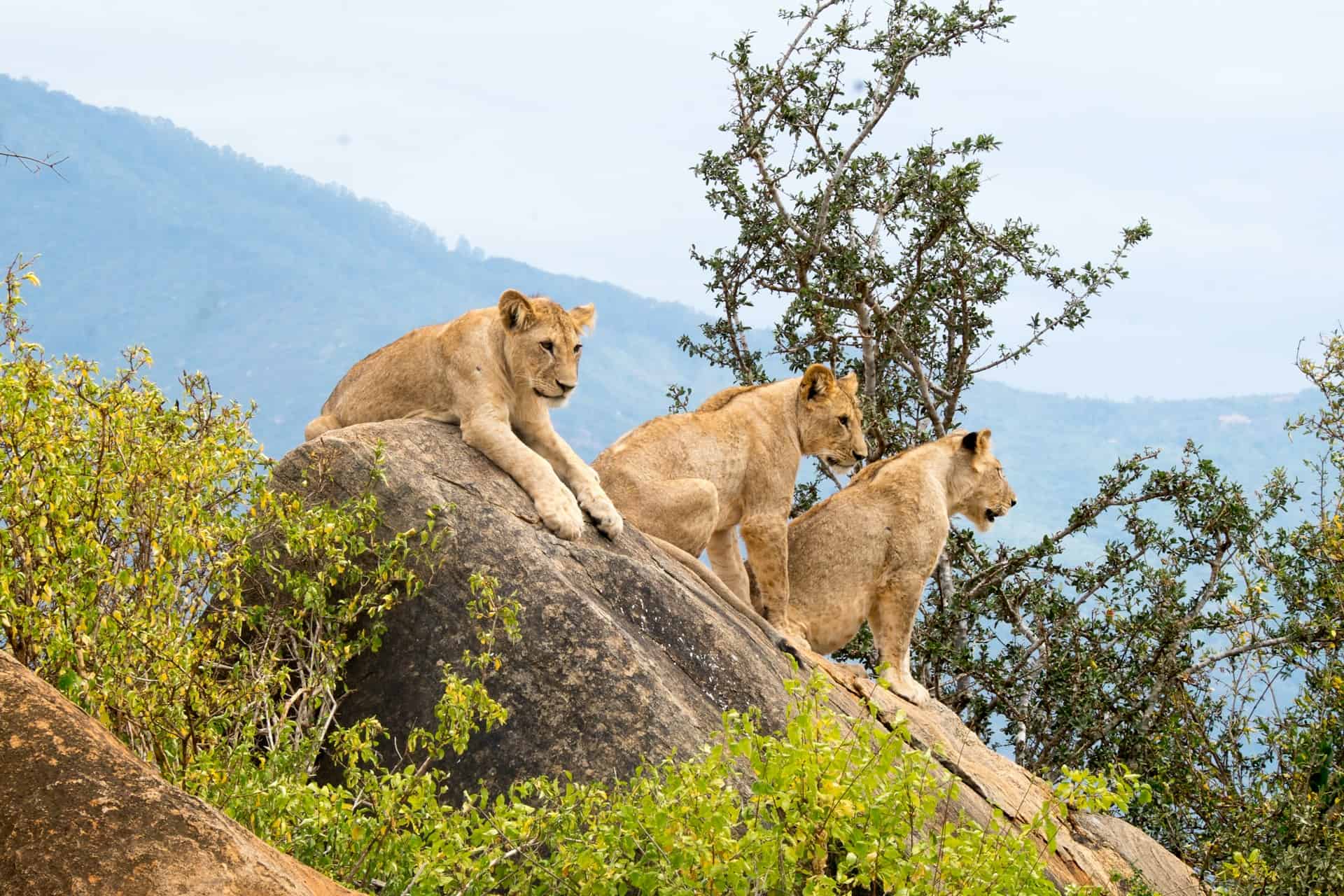
- Big cats including the famous Tsavo lions (maneless males)
Safari in Kenya Cost Considerations
Tsavo parks offer excellent value for money with lower accommodation costs and park fees compared to the Maasai Mara, making them perfect for budget-conscious travelers who don’t want to compromise on wildlife experiences.
Samburu National Reserve: Where Rare Species Roam
Samburu offers a completely different Kenya safari experience, showcasing species found nowhere else in Kenya. This semi-arid reserve along the Ewaso Ng’iro River supports unique wildlife adapted to harsh desert conditions.
The Samburu Special Five
Samburu is famous for five unique species you won’t find in southern Kenya parks:
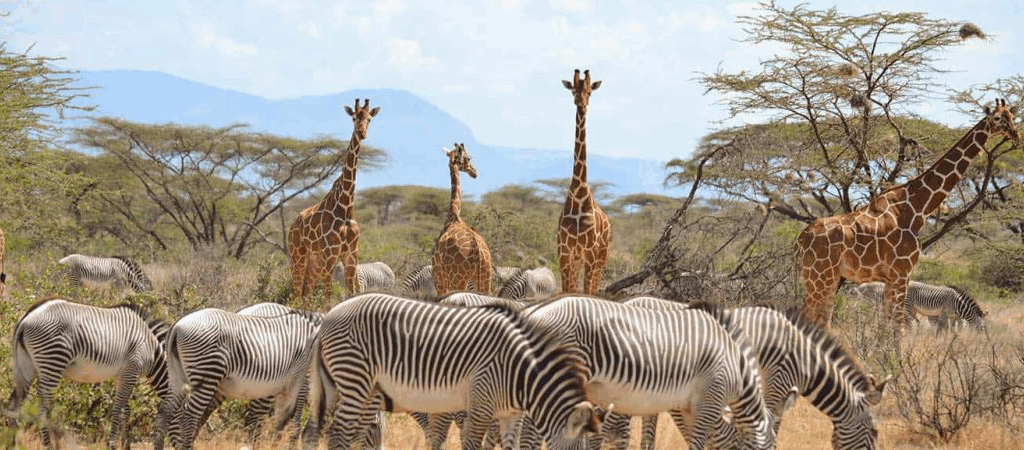
Grevy’s Zebra: Larger and more elegant than common zebras, with distinctive narrow stripes Reticulated Giraffe: Beautiful net-like pattern makes them easily distinguishable from Maasai giraffes Beisa Oryx: Magnificent desert antelope with long, straight horns Somali Ostrich: Blue-necked ostrich species found only in northern Kenya Gerenuk: Graceful antelope that stands on hind legs to browse acacia leaves
Leopard Capital of Kenya
Samburu has gained a reputation as one of the best places in Kenya to see leopards. The combination of riverine forests and rocky outcrops provides perfect leopard habitat, and several individuals have become habituated to vehicles.
Cultural Safari Experiences
Samburu offers authentic cultural encounters with the Samburu people, cousins to the Maasai. Visit traditional villages to learn about pastoralist life, warrior traditions, and remarkable adaptations to harsh desert conditions.
Cultural activities:
- Traditional dancing and singing
- Beadwork and handicraft demonstrations
- Warrior ceremonies and age-set traditions
- Traditional medicine and plant knowledge
Best Time to Visit
Dry season (June-October, December-March): Animals concentrate along the river, making viewing easier Wet season (April-May, November): Lush landscapes and active birdlife, though some areas may be inaccessible
Lake Nakuru National Park: Flamingo Paradise and Rhino Sanctuary
Lake Nakuru offers one of Africa’s most spectacular natural phenomena: millions of flamingos creating a pink blanket across the lake’s surface. This small but incredibly diverse park packs an enormous amount of wildlife into just 188 square kilometers.
Flamingo Spectacle
When conditions are right, up to 2 million lesser and greater flamingos can be present simultaneously, creating one of the world’s greatest ornithological spectacles. The alkaline lake provides perfect conditions for the blue-green algae that flamingos feed on.
Best flamingo viewing:
- Early morning: Calm water creates perfect reflections
- Late afternoon: Golden light enhances the pink coloration
- Dry season: More predictable flamingo numbers
Rhino Sanctuary Success Story
Lake Nakuru is one of Kenya’s most successful rhino sanctuaries, home to both black and white rhinos. The park’s fenced boundary and dedicated anti-poaching efforts have created a safe haven where these magnificent creatures can thrive.
Rhino viewing tips:
- Southern shore areas have the highest rhino density
- Early morning drives offer the best chances as rhinos are most active
- Both black and white rhinos are present – guides can help distinguish between them
Beyond the Lake
While flamingos steal the show, Lake Nakuru supports incredible diversity:
- Tree-climbing lions (unusual behavior also seen in Queen Elizabeth National Park, Uganda)
- Large buffalo herds roaming the grasslands
- Rothschild’s giraffes – a rare subspecies with distinctive white “socks”
- Over 450 bird species including African fish eagles and pelicans
Nairobi National Park: Safari Within the City
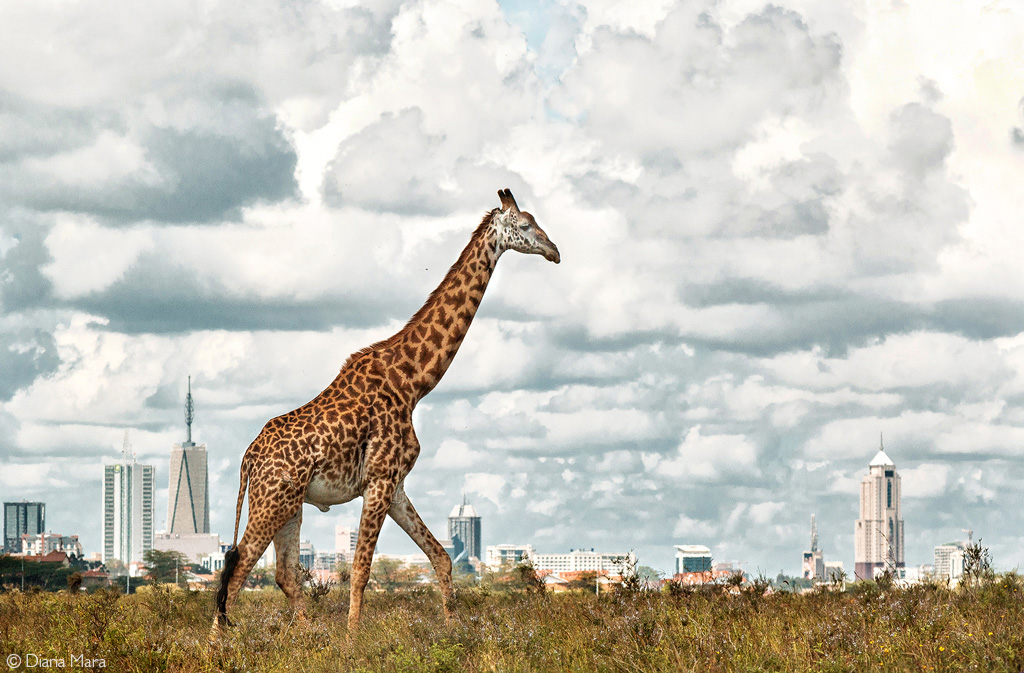
Nairobi National Park offers a unique experience unmatched anywhere in the world – a full safari experience just 7 kilometers from a capital city’s center. Against a backdrop of Nairobi’s modern skyline, you can witness lions hunting, giraffes browsing, and rhinos grazing.
Urban Wildlife Phenomenon
This 117-square-kilometer park is home to over 100 mammal species, including four of the Big Five (only elephants are absent). The juxtaposition of wildlife and urban development creates surreal and memorable experiences.
Unique photo opportunities:
- Giraffes with skyscrapers in the background
- Lions resting with the city skyline visible
- Aircraft landing at nearby Jomo Kenyatta International Airport while wildlife grazes below
Perfect for Short Visits
Nairobi National Park is ideal for:
- Layover safaris: Perfect for visitors with long airport connections
- Business travelers: Half-day safari experiences without leaving the city
- First-time safari visitors: Gentle introduction to African wildlife viewing
- Last-day additions: Final wildlife fix before departing Kenya
David Sheldrick Wildlife Trust
The park is home to the famous David Sheldrick Wildlife Trust, where orphaned elephants are rehabilitated before being released back into the wild. The daily elephant feeding sessions (11 AM-12 PM) offer intimate encounters with baby elephants.
Wildlife Highlights
Despite its proximity to the city, the park supports:
- Large predator populations including lions, leopards, and hyenas
- Significant rhino populations (both black and white species)
- Diverse ungulates including buffalo, zebra, wildebeest, and various antelope species
- Excellent bird watching with over 500 species recorded
Meru National Park: The Hidden Gem
Meru National Park represents Kenya’s best-kept safari secret. This 870-square-kilometer park offers pristine wilderness experiences without the crowds found in more famous parks. Made famous by Joy Adamson’s “Born Free” story about Elsa the lioness, Meru has undergone remarkable conservation success.
Pristine Wilderness Experience
Meru offers the kind of exclusive safari experience that was common decades ago but is increasingly rare today. You might spend entire days seeing no other vehicles while enjoying incredible wildlife encounters.
What makes Meru special:
- Minimal tourism impact: Authentic wilderness with few visitors
- Diverse ecosystems: From dense forests to open grasslands
- Permanent water sources: Multiple rivers support year-round wildlife
- Conservation success story: Remarkable recovery from past challenges
Wildlife Recovery Success
After facing significant challenges in the 1980s and 1990s, Meru has undergone one of Kenya’s most successful conservation recoveries. Wildlife populations have rebounded dramatically thanks to dedicated conservation efforts and community involvement.
Current wildlife highlights:
- Growing elephant populations using ancient migration corridors
- Successful rhino reintroduction program with both black and white species
- Large predator populations including lions, leopards, and cheetahs
- Rare species like reticulated giraffes and Grevy’s zebras
Cultural and Historical Significance
Meru holds special significance in conservation history as the place where Joy and George Adamson rehabilitated Elsa the lioness. Their grave sites can be visited, and the area remains a powerful symbol of human-wildlife coexistence.
Safari Lodges Kenya Options
Luxury (US$400-800 per night):
- Elsa’s Kopje: Luxury eco-lodge built around massive granite boulders
- Leopard Rock Lodge: Intimate camp with excellent game viewing
Mid-range (US$150-300 per night):
- Ikweta Safari Camp: Comfortable tented camp along Murera River
- Public campsites with basic facilities for budget travelers
Best Time to Visit
Dry season (June-October, January-March): Best for game drives and clearer roads Wet season (April-May, November-December): Lush landscapes, excellent bird watching, and dramatically lower costs
Tips for Choosing Your Perfect Safari Park
Match Parks to Your Interests
First-time safari visitors: Start with Maasai Mara for the classic experience, then add Amboseli for variety Photography enthusiasts: Amboseli for iconic shots, Samburu for unique species, Meru for pristine wilderness Budget travelers: Tsavo parks offer excellent value, Nairobi National Park for short visits Luxury seekers: Maasai Mara conservancies, Amboseli luxury camps, Meru’s exclusive lodges Cultural enthusiasts: Samburu and Maasai Mara for authentic cultural encounters
Kenya Travel Tips for Multi-Park Safaris
Time allocation: Spend minimum 2-3 days per park for meaningful experiences Transportation: Consider flying between distant parks to maximize game viewing time Seasonal planning: Coordinate visits with optimal viewing seasons for each park Accommodation booking: Reserve 6-12 months ahead for peak season (July-October)
Budget Planning Guide
Budget safaris (US$200-400 per person per day):
- Camping or basic accommodations
- Group tours with shared vehicles
- Focus on parks with lower fees (Tsavo, Nairobi)
Mid-range safaris (US$400-800 per person per day):
- Comfortable lodge accommodations
- Semi-private vehicles
- Mix of famous and lesser-known parks
Luxury safaris (US$800-2000+ per person per day):
- Premium camps and lodges
- Private vehicles and guides
- Exclusive conservancy access
- Additional activities (hot air ballooning, cultural visits)
Combining Parks for Maximum Diversity
Classic Northern Circuit (7-10 days): Nairobi → Samburu → Lake Nakuru → Maasai Mara Best for: Diverse species, cultural experiences, classic safari scenes
Southern Wilderness Adventure (10-14 days): Nairobi → Amboseli → Tsavo West → Tsavo East → Meru Best for: Wilderness experience, large herds, fewer crowds
Greatest Hits Tour (5-7 days): Nairobi → Maasai Mara → Amboseli → Nairobi Best for: First-time visitors, limited time, iconic experiences
Hidden Gems Explorer (10-12 days): Nairobi → Meru → Samburu → Lake Nakuru → Nairobi Best for: Experienced safari-goers, unique species, fewer crowds
Practical Considerations
Park fees: Budget US$60-80 per person per day for park entrance fees Transportation: Road transfers can be long; consider flying for distant parks Accommodation: Book early for peak season; last-minute deals available during low season Health: Malaria prophylaxis recommended for all parks except Nairobi National Park What to pack: Neutral colors, layers for temperature changes, good binoculars, camera with zoom lens
Your Kenyan Safari Adventure Awaits
Kenya’s incredible diversity of safari parks ensures that every traveler can find their perfect African adventure. From the world-famous Maasai Mara safari spectacle to the intimate wilderness experiences of hidden gem parks like Meru, each destination offers its own unique magic and unforgettable encounters.
The beauty of Kenya’s safari destinations lies not just in their individual characteristics, but in how they complement each other. Combine the classic Big Five experience of the Maasai Mara with the elephant paradise of Amboseli, add the unique species of Samburu, and finish with the pristine wilderness of Meru for a safari experience that showcases the full spectrum of Kenya’s natural wonders.
Whether you’re planning your first African safari or returning for another adventure, these seven best safari parks in Kenya represent the absolute cream of what this incredible country offers. Each park has its own personality, its own special moments, and its own contribution to the greater Kenya safari story.
Ready to start planning your Kenyan safari adventure? Book early to secure the best accommodations and catch peak wildlife seasons, especially if traveling during the Great Migration period (July-October). Consider combining multiple parks for the full Kenya experience, and don’t forget to include time for cultural encounters that will enrich your understanding of this remarkable country.
The wild heart of Africa is calling, and Kenya’s incredible parks are waiting to show you why this country remains the ultimate safari destination. From your first glimpse of a lion on the hunt to your final sunset over the African savanna, Kenya will capture your heart and create memories that last a lifetime.
Safari njema – have a good safari – and prepare for the adventure of a lifetime in the magical wilderness of Kenya.