
Lake Manyara National Park: Tanzania’s Scenic Wildlife and Birdwatching Paradise
Lake Manyara National Park is one of Tanzania’s most beautiful and ecologically diverse protected areas. Located in northern Tanzania, wedged tightly between the sheer walls of the Great Rift Valley escarpment and the shimmering waters of Lake Manyara, the park covers approximately 330 square kilometers—with nearly two-thirds of its area occupied by the liquid jewel of the lake itself.
Although smaller than its massive neighbors like the Serengeti or Tarangire, Lake Manyara punches far above its weight. It is globally renowned for its breathtaking scenery, exceptional birdlife, and its world-famous, enigmatic tree-climbing lions. Situated along Tanzania’s legendary Northern Safari Circuit, the park serves as the ultimate introduction to the country’s wildlife heritage.
History and Conservation Importance
Established in 1960 to protect the fragile aquatic and terrestrial habitats surrounding the lake, Lake Manyara National Park forms the core of the larger Lake Manyara Biosphere Reserve, recognized by UNESCO for its exceptional ecological value.
The park compresses six distinct micro-habitats into a single game drive: dense groundwater forests, sweeping acacia woodlands, open grasslands, swamps, volcanic hot springs, and the main alkaline lake bed. It acts as a vital sanctuary for resident big game and serves as a critical continental flyway and breeding ground for millions of migratory birds traveling between Africa, Europe, and Asia.
Exploring the 5 Distinct Ecosystems
1. The Groundwater Forest
Right past the park entrance gate, you plunge into a prehistoric, dense groundwater forest fed by continuous underground springs bubbling down from the nearby crater highlands. Towering wild fig and mahogany trees block out the harsh African sun, creating a humid, emerald sanctuary. This forest is alive with the chatter of massive olive baboon troops—among the largest populations in Africa—as well as playful blue monkeys, canopy birds, and hidden elephant herds moving silently through the deep undergrowth.
2. The Great Rift Valley Escarpment
The towering, jagged wall of the Rift Valley escarpment forms a sheer rock backdrop along the western boundary of the park. Rising hundreds of meters straight up from the plain, it shapes the region’s climate, creates dramatic vantage points, and is peppered with ancient baobab trees that cling to the steep, thin soils.
3. The Alkaline Lake Bed
The central heart of the reserve is Lake Manyara, a shallow, mineral-rich soda lake. Its surface area changes drastically with the seasons. During high waters, it forms an expansive aquatic mirror; during the dry season, it recedes to leave nutrient-dense salt flats that feed countless specialized organisms.
4. Acacia Woodlands & Grasslands
As the forest thins out, it gives way to grassy floodplains and umbrella thorn acacia woodlands. This open terrain is where classic African plains game—such as herds of Cape buffalo, Maasai giraffe, wildebeest, zebra, and impala—gather to graze, constantly watched by hidden predators.
5. Maji Moto Hot Springs
Tucked away in the far southern corner of the park is Maji Moto (Swahili for “Hot Water”). These highly active geothermal springs bubble up through the volcanic crust at near-boiling temperatures, a fascinating window into the violent subterranean forces that are actively tearing the African continent apart.

The Wildlife Highlights of Lake Manyara
The Enigmatic Tree-Climbing Lions
Outside of Manyara and the remote Ishasha sector of Uganda, lions rarely scale trees. Here, however, prides regularly ascend massive acacia and sausage trees, draping themselves across horizontal branches during the midday heat. While behaviorists still debate the exact cause, the primary theories include:
Escaping the aggressive, biting tsetse flies that swarm near the forest floor.
Catching the cool, refreshing breezes moving above the humid undergrowth.
Gaining an elevated, 360-degree look at grazing prey across the open floodplains.
Big Game & Predators
Beyond its climbing cats, Lake Manyara is widely regarded as one of the best spots in northern Tanzania for up-close viewing of large elephant families moving through the dense foliage. The park also hosts leopards, spotted hyenas, golden jackals, servals, and large pods of wallowing hippos at the northern edge of the lake.
A World-Class Birdwatching Paradise
With more than 400 recorded bird species, Lake Manyara is a bucket-list destination for serious birders.
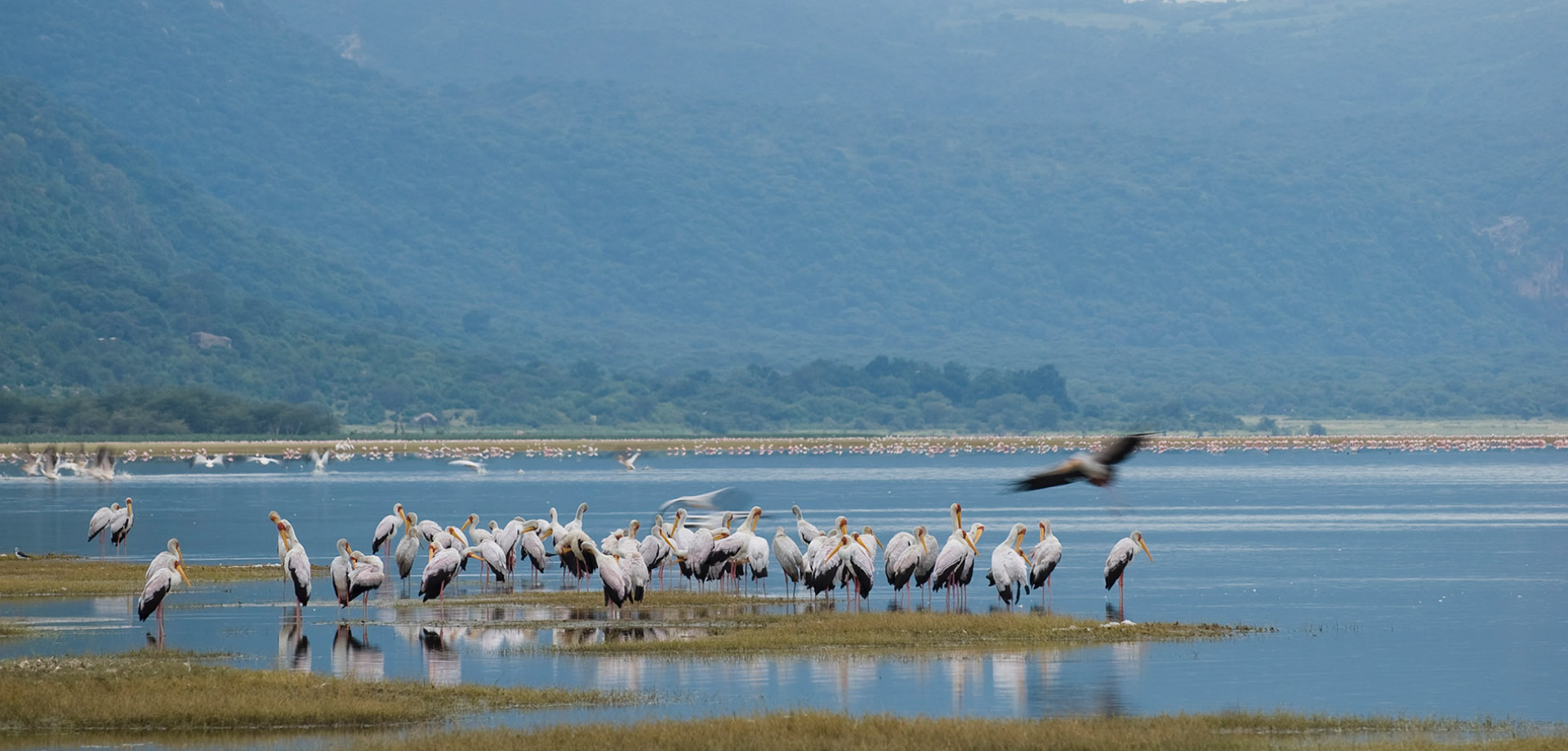
The Pink Phenomenon: The absolute highlight is the seasonal arrival of hundreds of thousands of lesser flamingos that tint the shallow lake edges a brilliant pastel pink.
Waterbirds & Forest Species: Travelers can spot great white pelicans, yellow-billed storks, goliath herons, and African fish eagles along the water. Meanwhile, the groundwater forest canopy shelters the massive silvery-cheeked hornbill and brilliant green turacos.
Unique Adventure Activities in the Park
The Lake Manyara Treetop Walkway: This is Tanzania’s very first canopy airwalk. Suspended securely 18 meters above the ground, this 370-meter-long series of netting-enclosed suspension bridges and tree-trunk viewing decks gives you a primate’s-eye view of blue monkeys, hornbills, and butterflies.
Canoe Safaris: When seasonal water levels are sufficiently high, the park allows low-impact canoe safaris directly on Lake Manyara. This quiet paddling experience lets you slide within meters of hippos and shorebirds without the rumble of an engine.
Night Game Drives: Unlike many northern Tanzanian parks, Manyara permits exclusive night safaris. Led by a specialized park ranger using filtered spotlights, these drives reveal rare nocturnal creatures like genets, civets, bushbabies, and hunting leopards.