
Samburu National Reserve: Kenya’s Untamed Wilderness and Africa’s Hidden Safari Gem
Nestled along the banks of the life-giving Ewaso Ng’iro River in northern Kenya, Samburu National Reserve stands as one of Africa’s most extraordinary safari destinations. While many travelers are familiar with Kenya’s iconic Maasai Mara, Samburu offers something entirely different—a raw, authentic wilderness experience where dramatic landscapes, rare wildlife, vibrant indigenous culture, and exclusive safari adventures combine to create an unforgettable journey.
For international visitors seeking a safari beyond the ordinary, Samburu represents Kenya at its most authentic. It is a destination where ancient traditions endure, where wildlife roams across vast untouched landscapes, and where every game drive reveals discoveries found nowhere else on Earth.
Where Is Samburu National Reserve?
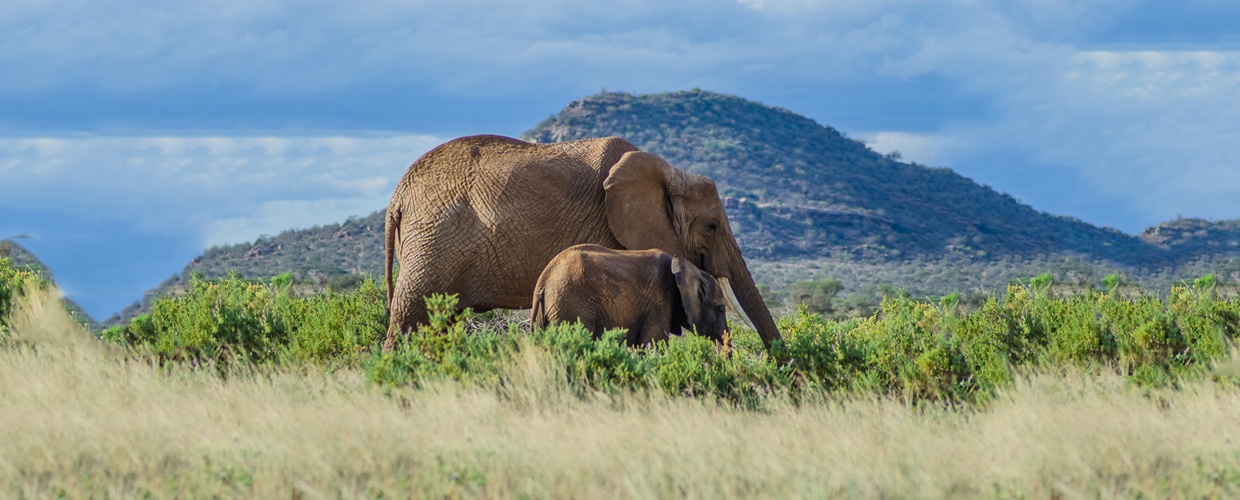
Samburu National Reserve is located approximately 350 kilometers north of Nairobi in Kenya’s arid northern frontier. Covering over 165 square kilometers, the reserve lies within the larger Samburu ecosystem and is bordered by the Buffalo Springs and Shaba National Reserves.
Unlike the flat, grass-dominated plains of the south, Samburu is characterized by rugged hills, open savannah, riverine forests, doum palm groves, and dramatic volcanic outcrops. The Ewaso Ng’iro River cuts through this semi-arid landscape, creating a vibrant green oasis that attracts wildlife year-round. The sharp visual contrast between the lush riverbanks and the surrounding scorched earth creates one of the most photogenic safari landscapes in Africa.
What Makes Samburu Unique?
1. Home of the Rare “Samburu Special Five”
Perhaps the greatest distinction of Samburu National Reserve is its collection of rare, highly adapted wildlife species found almost exclusively in northern Kenya. Spotting all five during a single safari is a massive milestone for wildlife enthusiasts and photographers alike:
Grevy’s Zebra: The world’s largest and rarest zebra species, instantly distinguished by its tall stature, narrow stripes, and solid white belly.
Reticulated Giraffe: Easily recognized by its striking, bright orange-brown geometric coat pattern separated by sharp white lines—considered by many to be Africa’s most beautiful giraffe.
Gerenuk: Often called the “giraffe gazelle,” this extraordinary antelope features an elongated neck and stands completely upright on its hind legs to browse high leaves.
Beisa Oryx: A magnificent desert antelope boasting long, spear-like horns and distinct black-and-white facial markings.
Somali Ostrich: Unlike the common ostrich, the male Somali ostrich features deep indigo blue-gray skin on its neck and thighs, thriving in the harsh northern sun.
2. Exceptional Big Cat Encounters & Elite Predator Sightings
Samburu is renowned for its healthy, relaxed predator populations. Lions roam the rocky outcrops, frequently resting beneath acacia trees during the heat of the day. Leopards are exceptionally habituated here and are among the most reliably sighted anywhere in East Africa, often observed draped across branches along the Ewaso Ng’iro River.
Because Samburu experiences lower visitor numbers than the southern parks, big cat viewings are wonderfully intimate, allowing you to watch hunts or family interactions without a wall of competing vehicles.
The Lifeline of Samburu: The Ewaso Ng’iro River
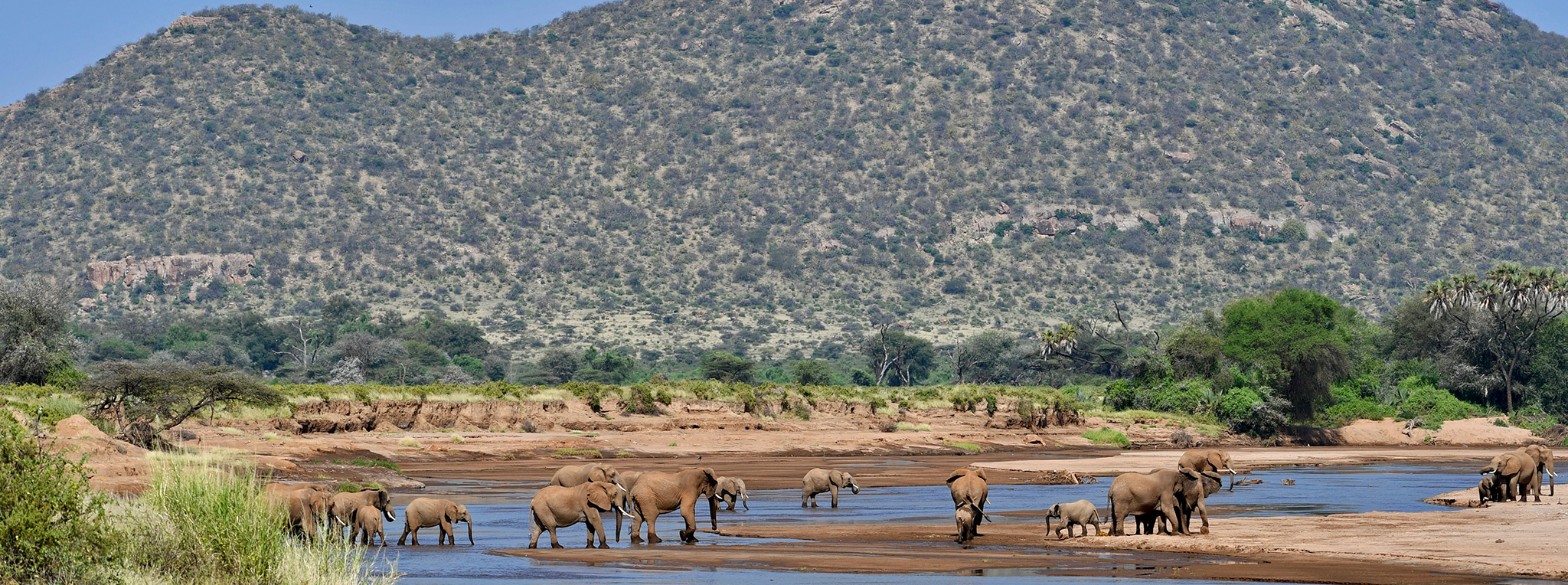
The Ewaso Ng’iro River is the beating heart of the entire ecosystem. Flowing through an otherwise unforgiving desert landscape, it creates a visual sanctuary that draws enormous concentrations of wildlife.
It is globally celebrated as one of Africa’s premier zones to view and photograph large elephant family groups. Visitors can watch large herds cross the muddy river waters, bathe, play, and feed on the surrounding doum palm trees. The river banks are also heavily populated by massive Nile crocodiles and over 450 species of birds, including striking martial eagles, glittering bee-eaters, and the spectacular vulturine guineafowl.
Comprehensive Samburu Safari Checklist
| The Special Five | Predators & Big Game | Avian Highlights |
• Grevy’s Zebra
• Reticulated Giraffe
• Gerenuk Antelope
• Beisa Oryx
• Somali Ostrich | • Leopards (High Density)
• Lions & Cheetahs
• African Wild Dogs
• Striped Hyenas
• Desert Warthogs | • Vulturine Guineafowl
• Martial Eagles
• Golden-breasted Buntings
• Somali Bee-eaters
• Von der Decken’s Hornbills |
The Fascinating Samburu Culture
One of the most enriching aspects of stepping off the beaten path into northern Kenya is experiencing the living culture of the Samburu people. Closely related to the Maasai, the Samburu are a proud, pastoralist community whose lives still revolve around their livestock in these harsh lands.
Through respectful, community-guided visits to local manyattas (villages), travelers can discover a resilient way of life that has remained deeply connected to the natural world for centuries. It offers a chance to experience traditional music, energetic dances, and see up close the striking, vibrant beadwork and traditional red garments that define their visual identity.
Luxury Accommodation in the Wilderness
Samburu hosts a collection of eco-sensitive luxury lodges and boutique canvas camps. Because properties are typically spread thin along the riverbanks or nestled into private conservation areas, guests can enjoy an elite level of privacy, uncrowded game drives, and highly personalized guiding standards.
Top 5 Luxury Accommodations in Samburu
| Property | Location & Setting | Standout Luxury Feature |
| 1. Sasaab Camp | Located on a hillside in the private West Gate Conservancy bordering the reserve. | Moroccan-inspired luxury tents with private plunge pools overlooking the Ewaso Ng’iro River. |
| 2. Elephant Bedroom Camp | Set directly on the banks of the river, deep inside the main reserve boundaries. | Intimate luxury tents raised on wooden decks where elephants regularly wander through camp to feed. |
| 3. Saruni Samburu | Built into a massive volcanic rocky outcrop in the Kalama Conservancy. | Eco-design villas with pristine, panoramic views stretching all the way to Mount Kenya. |
| 4. Samburu Intrepids Camp | A luxury stilted tented camp shaded by a dense canopy of riverine forest inside the reserve. | Elevated wooden walkways, private game-viewing decks, and a premier stargazing platform. |
| 5. Elephant Watch Camp | An eco-luxury, highly sustainable camp famous for its close relationship with elephant researchers. | Completely hand-built from fallen trees, offering unrivaled, ultra-close elephant interaction experiences. |
Best Time to Visit Samburu
June to October (Dry Season): The ultimate window for big game viewing. As the surrounding bush dries up completely, wildlife is forced to concentrate along the Ewaso Ng’iro River, making tracking predictable and straightforward.
December to March: Warm, dry, and exceptionally clear weather that provides prime photography lighting and superb landscape visibility.
April, May & November (The Green Season): The rains turn the red desert into a lush, green paradise. This period is a paradise for birdwatchers due to incoming migratory species, and offers lower lodge rates and zero crowds.
Conclusion
Samburu National Reserve is more than a safari destination—it is a journey into one of Africa’s last great wildernesses. Here, rare animals roam beneath endless skies, ancient cultures continue to thrive, and every sunrise brings the promise of extraordinary, exclusive encounters. For international travelers looking to discover a side of Kenya beyond the familiar tourist paths, Samburu presents an unforgettable blend of wildlife, culture, luxury, and raw adventure.