
Serengeti National Park: Tanzania’s Iconic Wildlife Destination and Endless Plains
Serengeti National Park is one of the most famous wildlife conservation areas in the world and the undisputed crown jewel of Tanzania’s tourism industry. Located in northern Tanzania, the park covers approximately 14,750 square kilometers of vast savannah plains, woodlands, riverine forests, and ancient rocky outcrops known as kopjes. The name “Serengeti” comes directly from the Maasai word Siringet, meaning “the endless plains”—a flawless description of a breathtaking landscape that stretches uninterrupted as far as the eye can see.
Recognized as a UNESCO World Heritage Site, Serengeti National Park is renowned for its exceptional biodiversity, spectacular wildlife populations, and the world-famous Great Migration. Every year, millions of animals move across the Serengeti ecosystem in one of the most extraordinary natural events on Earth, attracting visitors, photographers, researchers, and conservationists from around the globe.
History and Conservation Significance
Established in 1951, Serengeti National Park is one of Africa’s oldest and most treasured national parks. It was originally created to protect the region’s unique wildlife and delicate ecosystems from increasing human pressures. Over the decades, the park has become a global symbol of wildlife conservation and ecological preservation.
The Serengeti ecosystem is not confined by political borders; it extends beyond the park’s official boundaries into neighboring game reserves and reaches north into Kenya’s Maasai Mara National Reserve. Together, these protected areas form one of the largest, most ecologically intact wildlife habitats remaining on the planet. The park plays a critical role in preserving endangered species, maintaining evolutionary balance, and promoting sustainable ecotourism that actively funds local communities and the national economy.
The Great Migration: Earth’s Ultimate Wildlife Spectacle
The Great Migration is the Serengeti’s most celebrated attraction and is widely described as the greatest wildlife show on earth. More than two million wildebeest, accompanied by hundreds of thousands of zebras and gazelles, undertake an epic, endless circular migration in a relentless search for fresh grazing lands and clean water.
Driven by seasonal rainfall patterns, this journey is fraught with high-stakes drama, intense predator-prey interactions, and immense natural obstacles. Watching massive columns of animals stretching all the way to the horizon is a deeply humbling experience that defines the magic of an African safari.
The Four Main Pillars of the Migration Cycle
The Calving Season (January – March): The herds settle into the fertile southern plains of the Serengeti and the Ndutu region. Within a synchronized two-to-three-week window, roughly 800,000 newborn calves are born, sparking intense predator action from nearby lion prides and cheetahs.
The March to the West (April – June): As the southern pastures dry up, the herds track northwestward toward the Western Corridor, navigating the crocodile-infested waters of the Grumeti River.
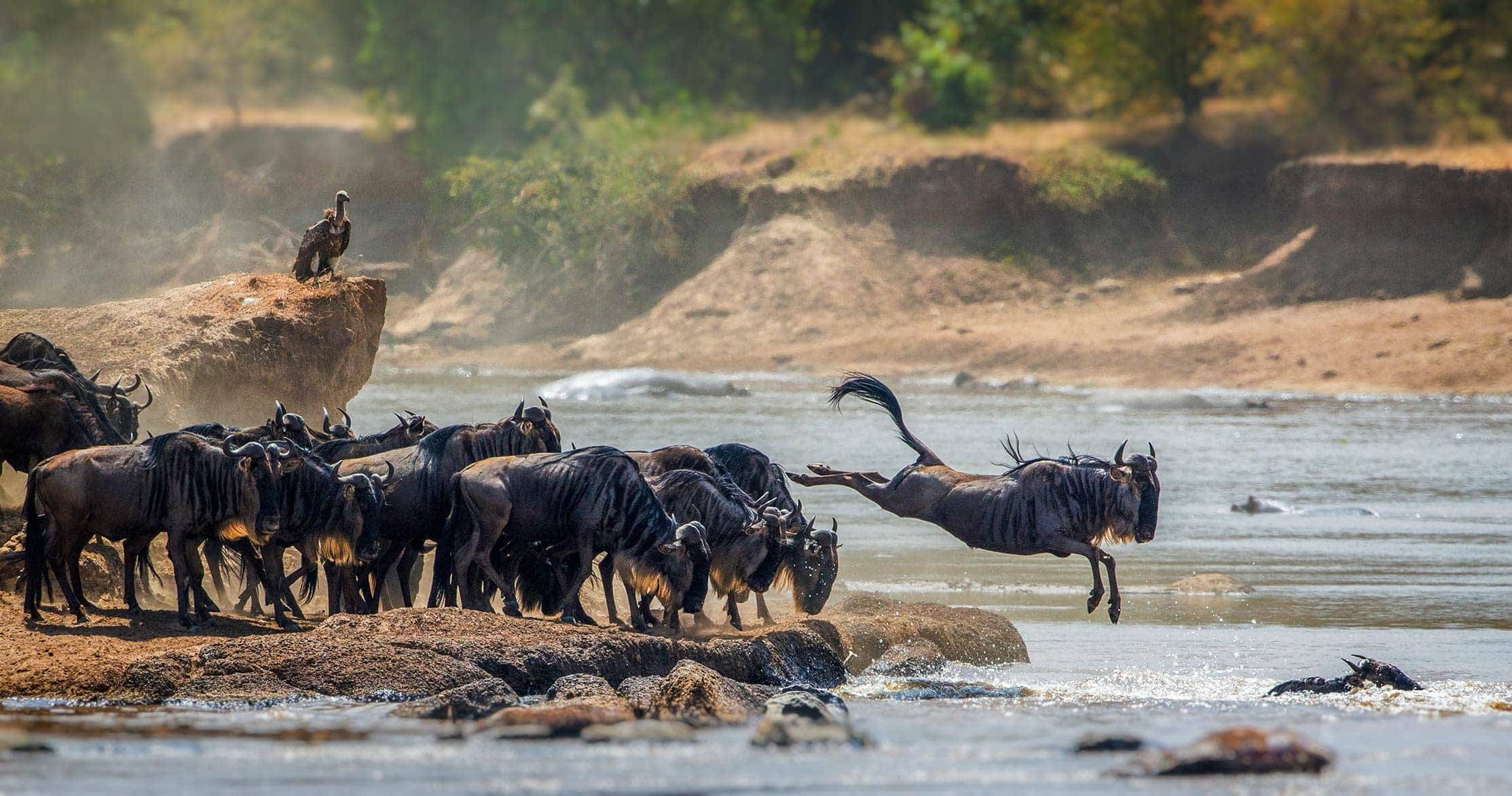
The River Crossings (July – October): The migration reaches its peak dramatic crescendo in the northern Serengeti. The herds must plunge across the turbulent, steep-banked Mara River to reach the Maasai Mara, facing massive Nile crocodiles and ambush predators waiting on the shores.
The Return Journey (November – December): Driven by the short rains, the survivors turn back south, trekking down the eastern boundaries to replenish the southern plains, ready to begin the ancient loop all over again.
Wildlife Abundance & Biodiversity
Serengeti National Park supports an unparalleled volume of resident wildlife, hosting more than 70 large mammal species and over 500 varieties of birds.
The Big Five Tracking
For travelers aiming to check off Africa’s iconic Big Five, the Serengeti offers supreme viewing conditions:
Lion: Home to some of the largest, healthiest prides in Africa.
Leopard: Regularly seen resting on horizontal branches of sausage trees along the Seronera River valley.
Elephant: Impressive breeding herds move comfortably through the northern and western woodlands.
Cape Buffalo: Massive, formidable herds number in the tens of thousands across the plains.
Rhinoceros: Highly elusive but strictly protected within specialized sanctuaries inside the park.
Predators vs. Herbivores
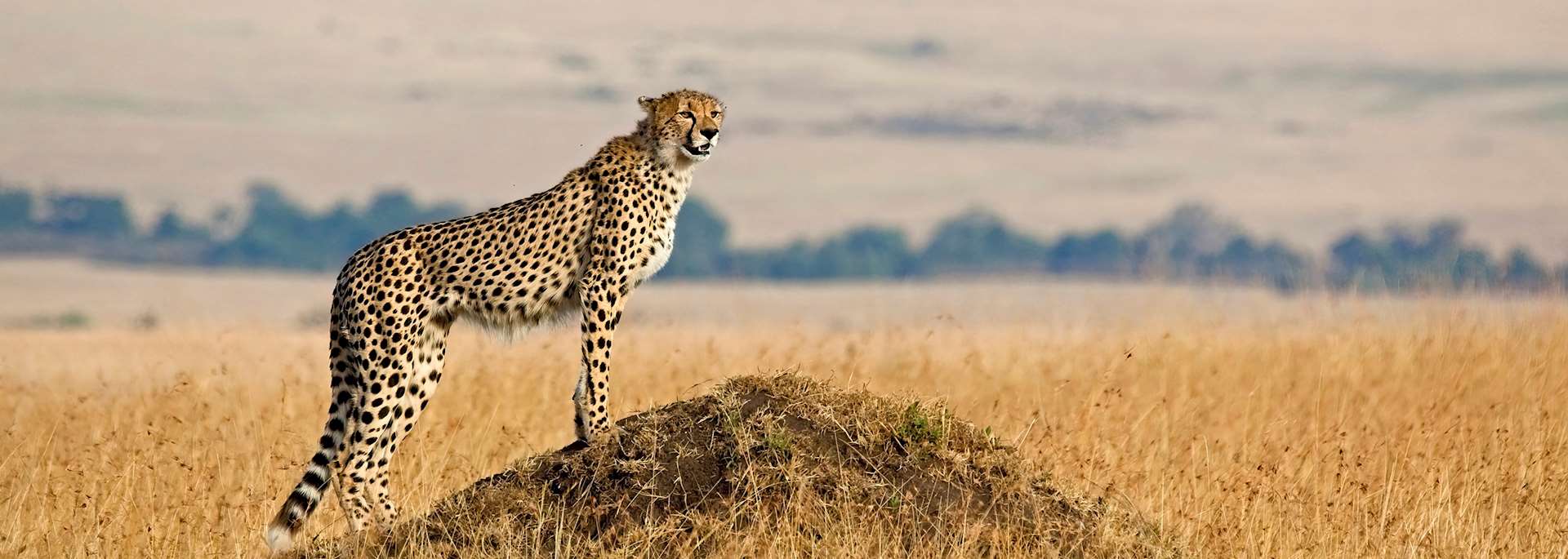
Because the plains are teeming with millions of target herbivores—including plains zebras, elands, topis, impalas, hartebeests, and Thomson’s gazelles—the predator population is exceptionally robust. The park boasts one of the highest densities of lions in the world, alongside swift cheetahs patrolling the open grasslands, spotted hyenas, elusive jackals, and critically endangered packs of African wild dogs.
Exploring the Diverse Serengeti Landscapes
| Landscape Zone | Visual Characteristics | Key Wildlife to Look For |
| The Southern Plains | Endless, treeless short-grass plains stretching to the horizon. Highly fertile volcanic soil. | Migrating wildebeest, calving herds, cheetahs, and bat-eared foxes. |
| Granite Kopjes | Ancient, weathered granite rock islands rising dramatically out of the flat grass fields. | Lions using them as lookout towers, leopards, and rock hyraxes. |
| Western Corridor & Rivers | Dense riverine forests, clay soils, and the sweeping channels of the Grumeti and Mara Rivers. | Massive Nile crocodiles, pods of hippos, and black-and-white colobus monkeys. |
| Northern Woodlands | Rolling hills dominated by open acacia woodlands and broad-leaved forests. | Resident elephants, giraffes, dik-diks, and a massive variety of hornbills. |
Immersive Safari Experiences & Activities
To fully appreciate the scale of the Serengeti, travelers can diversify their itineraries with several world-class adventure activities:
Classical Game Drives: Tailored morning, afternoon, and full-day game viewing in custom-designed 4×4 vehicles with pop-up roofs.
Hot Air Balloon Safaris: An iconic sunrise flight floating silently above the canopy, providing a bird’s-eye view of elephant herds and migrating columns below, followed by a champagne bush breakfast.
Guided Walking Safaris: Stepping out of the vehicle in designated wilderness zones alongside an armed park ranger to study animal tracks, insects, medicinal plants, and the finer details of the bush.
Maasai Cultural Tours: Visiting structured community villages outside the core park boundaries to engage with the Maasai people, discovering their ancient pastoral traditions, vibrant dances, and unique beadwork.
Best Time to Plan Your Visit
While the Serengeti is a spectacular, highly rewarding year-round destination, timing your arrival depends completely on what you wish to experience:
January to March (The Calving Window): Best for witnessing the birth of calves, green landscapes, clear photographic light, and explosive predator-prey action in the south.
June to October (The Peak Dry Season): The absolute prime window for general big game viewing. Vegetation thins out, drawing animals predictably around permanent river pools. This is also the ideal time to head north for the legendary Mara River crossings.
November to December (The Short Rains): A peaceful “green season” featuring lower lodge rates, fewer vehicles, lush landscapes, and the arrival of millions of colorful migratory birds from Europe and Asia.
Conclusion
Serengeti National Park is more than just a typical safari destination; it is a living monument to Africa’s natural heritage and one of the planet’s most vital, uninterrupted wild ecosystems. Whether you are watching a newborn calf take its first steps on the southern plains, photographing a leopard tucked away in a granite kopje, or feeling the ground vibrate under the thundering hooves of the Great Migration, a journey into the endless plains leaves an indelible mark on the soul.